Photobucket

Photobucket
A place to ponder books.
Showing posts with label Japan. Show all posts

Tuesday, May 7, 2013

Sawako Ariyoshi with a Generational Tale

The River Ki by Sawako Ariyoshi is a beautifully written novel that opens a window into Japan's historic shift in social culture and separation from tradition. The story begins at the turn of the 20th Century, when high ranking family names and samurai titles still had a hold on the land. Traditional life was very much alive and complimented with intriguing myth and rituals practiced by the Japanese for generations. Among these myths are tales of the River Ki that seem to indirectly shape the lives of three generations of women that live along its banks. The first daughter Hana is told by her grandmother that a woman must travel down the River Ki on the day of her wedding, since going against the flow of the river is bad luck. It is like going against the will of nature. Like all the brides of her family did so before, Hana would travel down the river to meet her husband on her wedding day.

This tale is infused with rich symbolism of the River Ki, though it offers an even more unique glimpse at the rapid social shifts that changed the face of Japan. The tradition, rituals and social rules that Hana so gracefully practices seem only to offend her daughter Fumio. It is probable the focus on Fumio holds the most importance, since Hana's other daughters seem to accept the old traditional ways with pleasure. Fumio represents the shift in a woman's role in Japan, and this is presented with a saddening desperation from her mother Hana. She cannot find a way to get through to her daughter, and the tradition is slowly slipping away.


Sawako Ariyoshi is one of the most popular and successful modern writers of Japan. Her ability to craft beautiful prose only adds to each story rich with compelling characters and historic context. This author follows the ever-changing waves of life in 20th Century Japan at a time when war and social upheaval paved the way for modern development. This rapid shift came to Hana like a rug pulled out from underneath her family tree. The framework in which the greatness of the Matani family was built had become obsolete and thus disintegrated with the changing times.


Thursday, February 2, 2012

#2 Shibumi by Trevanian

 Shibumi lives up to its name in the way it unveils an array of unusual topics.  Among these topics are ideas which most people stray from mentioning.
 

Through a horrendous series of circumstances involving the duty that comes with a warrior's honor and the evils of World War II, Nicholai Hel winds up tortured and imprisoned.

A linguistic genius, he acquires a way to study and train in solitude. His goal of Shibumi and mystic sense of proximity allows him to find purpose in the seemingly meaningless activity of decoding anything he can get his hands on.

Nicholai seeks to perfect skills which at first, appear almost silly repetitions. Though, understanding Basque (language), becomes one of his greatest assets in life. Through it he acquires his loyal friend, BeƱat Le Cagot.

For a moment, I griped at Nicholai’s arrogance. Though he understands he is intelligent and others may never see things his way, he fails to recognize this fatal concept, just so.  He hides from the outside like a disease, and this is where we get our antihero.

Nicholai has been trained to kill with ordinary household objects like pencils or drinking straws.  This man is a mystic, a genius, the most artful lover, and he knows it. The modesty factor is only slightly lacking.  But, his opinionated thinking provokes a strong reaction from the world. And as it is, Nicholai Hel exists either as a highly admired or hated man.

Kishikawa-san says to Nicholai, “....You will have to live in this future, my son. It will do you no good to dismiss the American with disgust. You must seek to understand him, if only to avoid being harmed by him.”

This wisdom really applies to all. If you know your perception of the world is different than a large percentage of the population, then you still must strive to understand them. It is for your own benefit that you use your intellect to understand other people.

The author Trevanian has a good bit to say about the world, and his views should not be taken as nonsense. There is certain truth about the illusions of government and the corruption that comes with capitalism. And there are several philosophic lessons amongst the superficial concepts that paint the ultimate escape through a tunnel of racing waters beneath a bottomless cave.

Most of all, I appreciate the mentioning that most main characters have become a genre of mediocrity. Between your average mistake-stricken hero and your mystical super-genius assassin, we may just have, the protagonist of absolute greatness.

And for the record, I really enjoyed Le Cagot's character.

Trevanian.  Shibumi (New York:  Broadway Paperbacks, 2005), 104.

Friday, January 27, 2012

Next a Spy-Thriller


#2  Shibumi by Trevanian

 This novel jumped out at me, while I was browsing the bookstore.

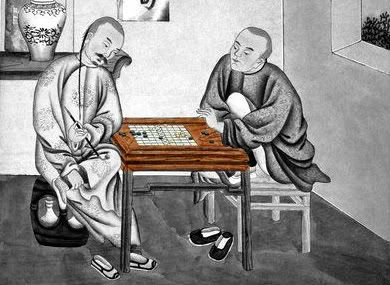
It’s the story of Nicholai Hel an internationally interchangeable assassin who is indifferent to national identity.  He is introduced to the game Go, and inspired by a single word, Shibumi.  

Ancient board game Go

Shibumi-  in Japanese, is an aesthetic of simple, subtle, and unobtrusive beauty.  

Or as I see it- a modest, but not to be underestimated, refinement.

Nicholai is referred to as Nikko in Japan where he trains under a Seventh Dan.  (Which I imagine is comparable to a seventh degree black belt for anyone who isn’t familiar with the Dan system)  

Nikko is destined to become a badass.

It is really strange to come across this book at a time when the same problems written about in the 1970s have multiplied.  Except, since these problems have gotten relatively worse over time, no one seems to notice them anymore.  

It’s funny to note that this novel doesn’t hold back in stating the issues.  Materialism.  There’s a concept where most people will turn a blind eye, but in reality it has spiraled seriously out of hand.  For anyone who’s been out of the country, it is easy to make a quick comparison.   

Also note through personal study, the Japanese never favored the merchant.  Merchants made nothing themselves but profited from the good work of others.  This reasoning is wise. 

Much to be learned from Shibumi.